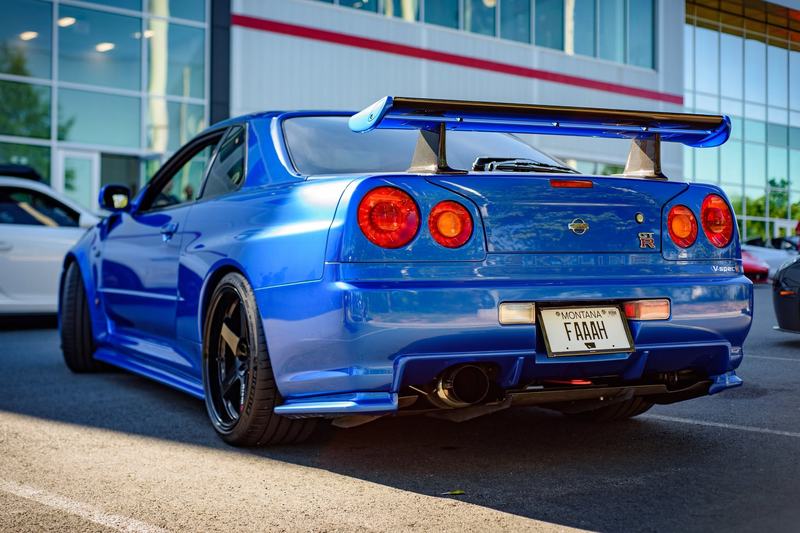
Every imported car at every meet came through two separate federal doors, and almost every conversation about importing one mentions a single number. There are two. They are set by different agencies, they are counted differently, and in any given year there are four model years that have cleared one and not the other.
The safety clock: 25 years
This is the famous one, and in the regulation it is one sentence long. Title 49 of the Code of Federal Regulations, section 591.5, lists what an importer may declare, and paragraph (i)(1) reads in full: “The vehicle is 25 or more years old.” That is the entire exemption from the Federal Motor Vehicle Safety Standards.
Customs and Border Protection states the other side of it plainly: “motor vehicles less than 25 years old must comply with all applicable Federal Motor Vehicle Safety Standards (FMVSS) in order to be imported permanently into the United States.” There is no negotiating with that sentence and no paperwork that gets around it.
The emissions clock: 21 years, and it shows its working
The second door is the Environmental Protection Agency’s, and it opens four years earlier. EPA Form 3520-1, the declaration handed to Customs at entry, sets out code E: “vehicle at least 21 years old (calendar year of manufacture subtracted from year of importation) and in original unmodified configuration is either exempted or excluded from EPA emission requirements, depending on age.”
Read the parenthesis, because it is the most useful sentence in either rule. EPA wrote its arithmetic into the form: calendar year of manufacture, subtracted from year of importation. Not a birthday, not a build date. A subtraction of two years. In 2026 that clears anything built in 2005 or earlier, from the first of January.
The four years in between
So in 2026 the emissions clock has cleared the 2005s and the safety clock has cleared the 2001s. Everything built in 2002, 2003, 2004 and 2005 is clean on emissions and stopped dead on safety.
That gap is where the money goes. Somebody hears twenty-one years, finds a 2003 car at a Japanese auction, and buys it. The emissions side of the entry would have been fine. The car is still not coming in.
The clause the scene should read twice
The same code E continues: “Vehicles at least 21 years old with replacement engines are not eligible for this exemption unless the replacement engine is the same model as originally installed, or an engine with any aftertreatment from a certified vehicle no older than the one being imported.”
For a scene partly built on engine swaps, that is a large sentence in small type. A car that left the factory with one engine and arrives at the port with a different one is not in original unmodified configuration, and the exemption it was relying on is the one that has just stopped applying.
How the 25 years is counted, and why to ask
Here is the honest part. The regulation says “25 or more years old” and does not define the arithmetic anywhere in its own text. EPA wrote its subtraction into its form; the safety rule did not. The difference between counting from a model year and counting from a build date is an entire model year of cars, and a car built late in a calendar year is exactly the car that difference lands on.
Which makes one habit worth having: get a photograph of the manufacturer’s plate, the one in the door shut or on the strut tower with the build date stamped into it, before any money moves. The seller has it. It takes them ten seconds. And read the importing agency’s current guidance rather than a forum’s summary of it, because the summary is what people are quoting when they are wrong.
What is actually handed over at the border
Two forms: the DOT’s HS-7 and the EPA’s 3520-1. Alongside them, CBP asks for “the shipper’s or carrier’s original bill of lading, the bill of sale, foreign registration, and any other documents covering the vehicle.”
And one door that people still talk about as though it were open. CBP: “As of July 1, 1998, EPA no longer has the one-time exemption for vehicles five or more model-years old.” That shortcut has been closed for longer than most of the cars now becoming eligible have existed.
Then the part nobody plans for
Clearing customs is not a title. The federal government decides whether the car may enter the country; a state decides whether it may be registered, and that is a separate process with its own queue, its own inspection, and its own opinion about a vehicle identification number that is not seventeen characters long.
This is where imported-car timelines actually go wrong, and it is worth researching before the car is bought rather than after it is sitting at the port. The rules are the state’s own and they differ; the page to read is that state’s DMV, not this one.
Before you bid
The build date, photographed on the plate, not the model year in the listing. Whether the engine in it is the engine it left the factory with. Both clocks, checked against the actual build date rather than the one you remember. And your own state’s titling process for a car with a foreign VIN, read before the money moves rather than after.
Why this reads as complicated
Because two agencies wrote two rules for two different purposes and never had reason to make them agree. One is about whether the car would survive a crash test it was never designed for. The other is about what comes out of the exhaust. There is no reason those should resolve to the same number of years, and they do not.
The figures and quotations above were read from the regulation, the EPA’s own form and CBP’s own guidance on 7 September 2026. Forms get revised; the sources are linked below so the current wording can be checked rather than trusted.
- Source: 49 CFR 591.5, Declarations required for importation, read 7 September 2026
- Source: EPA Form 3520-1 (August 2024), Declaration: Importation of Motor Vehicles, read 7 September 2026
- Source: US Customs and Border Protection, Importing a Motor Vehicle, read 7 September 2026
ImportingJDMBuying25-year rule