Longer auto loans often carry a lower advertised rate than shorter ones, which reads like the longer term is cheaper. It is not, and the gap is easy to size exactly.
The two rates
The Federal Reserve Bank of St. Louis publishes commercial bank new-car loan rates. For May 2026 the 48-month average was 7.47 percent and the 60-month average was 7.14 percent. The longer term is 33 basis points cheaper.
The same car, both ways
Take $35,000 financed, which is the amount left after a deposit and a trade-in on an ordinary new car. The figure is chosen for the illustration; the conclusion does not depend on it.
Over 48 months at 7.47 percent the payment is $845.77 and the total paid is $40,597.04, of which $5,597.04 is interest. Over 60 months at 7.14 percent the payment is $695.36 and the total paid is $41,721.37, of which $6,721.37 is interest.
The trade
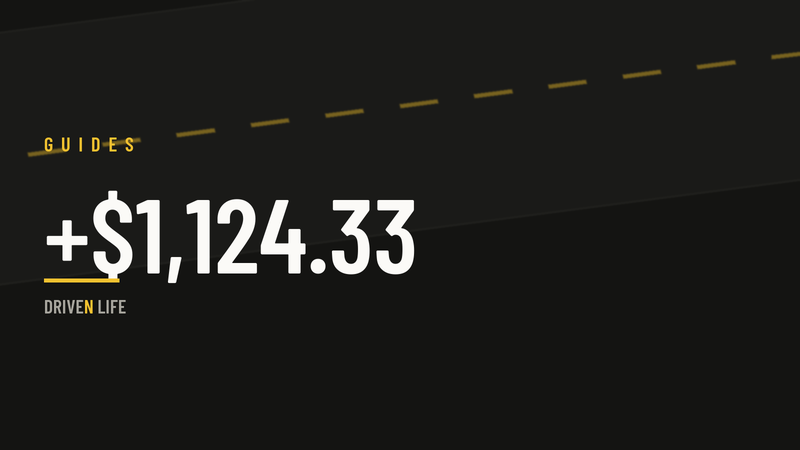
The longer loan is $150.41 a month easier and $1,124.33 more expensive. The lower rate is real; twelve extra months of interest outweighs it.
The part that costs more than the interest
The $1,124 is the visible cost and it is usually the smaller one. The $150 a month is the number that changes behavior: it is what a buyer takes to the next rung of car rather than to their own bank account. Stretched over 60 months at these rates, $150 a month of payment buys roughly $7,600 more car. That is how a longer term reliably becomes a bigger loan instead of a cheaper one.
The second effect is slower principal. A longer loan pays the balance down more slowly while the car depreciates at the same speed it always did, so the period where the loan is larger than the car is worth lasts longer. Nothing bad happens during that period unless the car is written off or has to be sold, and those are exactly the moments when nobody has a choice about the timing.
The test
Compare total interest, not payments. Two loans quoted side by side should be written down as four numbers each: rate, term, payment, and total paid. The last one is the price of the money, it is the one no advertisement leads with, and on any loan calculator it takes about fifteen seconds to produce.
If the shorter term’s payment does not fit, that is real information about the car rather than about the loan.
- Source: Federal Reserve Bank of St. Louis, new-car 48-month loan rate, read 7 September 2026
- Source: Federal Reserve Bank of St. Louis, new-car 60-month loan rate, read 7 September 2026